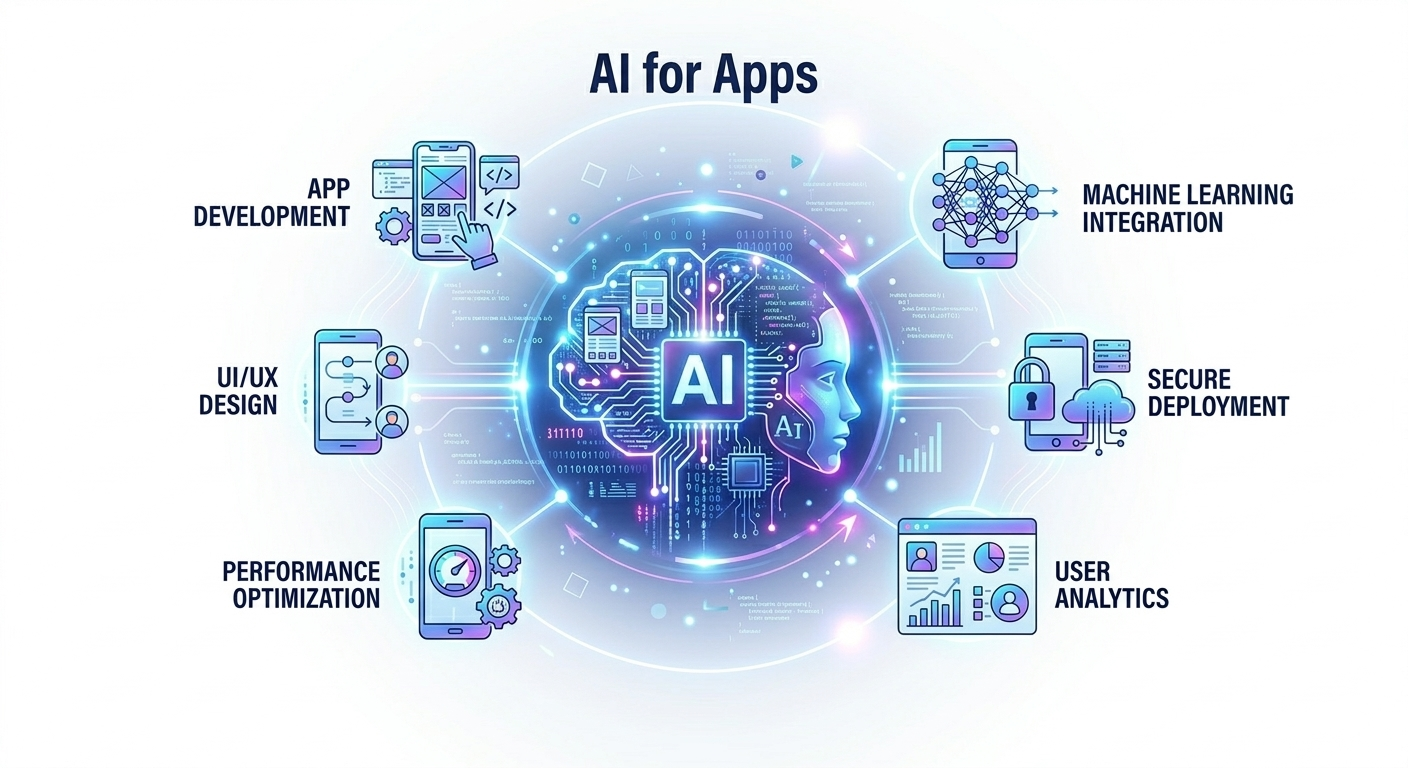
Credit Source: ChatGPT Credit Image Source: ChatGPT 👇
1. What is AI for Apps?
AI for apps means integrating AI technologies such as machine learning, chatbots, automation, and data analysis into applications. This helps apps learn from user behavior and improve over time.
Examples:
- Voice assistants
- Smart recommendations
- Chatbots for customer support
- Image or speech recognition
2. Benefits of AI in Apps
✅ Automation – Apps can perform tasks automatically.
✅ Personalization – Content or products are recommended based on user behavior.
✅ Better User Experience – Faster responses and smarter features.
✅ Data Insights – AI analyzes data to improve decisions.
✅ 24/7 Support – AI chatbots can help users anytime.
3. Popular AI Features in Apps
- Chatbots for customer service
- Voice recognition
- Image recognition
- Smart search
- Recommendation systems
- Predictive analytics
4. Examples of Apps Using AI
Many popular apps use AI technology:
- Netflix – recommends movies and shows based on your viewing habits.
- Spotify – suggests music using AI algorithms.
- Google Maps – predicts traffic and fastest routes.
- TikTok – uses AI to recommend videos.
5. AI Tools for Building Apps
Developers use AI tools and platforms such as:
- OpenAI – AI models for chatbots and automation.
- TensorFlow – build AI models.
- PyTorch – deep learning development.
- Google Firebase – includes AI and analytics tools.
6. Future of AI in Apps (2026 and Beyond)
AI-powered apps will likely include:
- Fully automated customer support
- Advanced voice assistants
- Personalized education apps
- AI health monitoring apps
- Smarter productivity tools
💡 Example: In the future, an AI app could automatically schedule your day, recommend meals, manage finances, and answer questions.